
Something that one player and I always do is make his characters for my campaigns together. It's something that works really well, for both of us, and I think it's a practice that really helps flesh out a character and plant some solid story hooks.
He usually comes up with an idea or concept on his own, thinks about it a bit, and then comes over and we hammer out the details. As a DM, I can offer suggestions that he may not have thought of, or outright tell him if a power/feat choice is a bad idea (like focusing on an undead-hunting theme in an undead-light campaign).
One of the first things we discuss is if his character works in the campaign. For instance, he had an idea for our upcoming Dark Sun campaign to be a Raven-based warlock. Problem was, not only is this an arcane class (meaning that since it's Dark Sun, there should probably be a bit more history/backstory established as to how he is able to use arcane magic) but he also wanted to use a Spellscar, something from Forgotten Realms with FURTHER arcane magic connections.
If he had showed up on game night with this character, I would have been put in a tough situation. Without some time to think about it (such as even looking up what a Spellscar IS) I probably would have said his PC wasn't eligible for Dark Sun play since I had no idea how his powers worked and if they were even possible in Athas. He would have had to make a new one, and delayed the game...something which would have satisfied no one. Instead, however, we were able to look up Spellscars and toss some ideas back and forth how exactly it worked in the Dark Sun universe. (Long story short, it was because a Sorcerer-King cursed him years ago.)
Another way this shared character-building is helpful is when it comes to planning his backstory! Initially when I asked him what his character did, he had some vague idea of being an old (really old) wandering nomad, with magic powers because of "a curse". And he had a giant (medium-sized) pet Raven that also served as a mount.
This was alright, but other than the raven, it's pretty bland and lacking in specificity and hooks. And the raven...WTF. How the hell would this fit into the story? But don't get me wrong - this is a great time for a DM, as you can take what your player has in mind and not only enhance it, but also enhance it in a way that it will flawlessly fit into your campaign. And by doing it together, cooperatively, it's still HIS backstory...you just helped steer him to the final version.
I proposed some different ideas, and after discussing them a bit, throwing some out, modifying some others, his character became a nomad who wandered between city-states as a special courier, riding his Raven mount (keeping his close connection to the Raven.) We also decided that the reason his arcane abilities have not gotten him locked up, enslaved or killed by a Sorcerer-King (SK) is because he is actually doing the SK's bidding, by serving as a guardian to the SK's favorite, exotic, last-of-its-kind pet...a Dire Raven. The Raven was suffering/dying in captivity, unable to be free and run/fly unhindered, so the SK had to free it. And to ensure that it would be protected, he charged the player's character with the responsibility of guarding it, and "blessed" him with powerful magic abilities.
Thus is this character able to use arcane magic & not be killed by the SK, and it the Dire Raven's need to be free and restless nature also connects nicely to why they are always on the move, living a nomadic life.
From there, we moved on to the sometimes tricky question of why the character is adventuring. Fortunately, we quickly came up with a great reason - to find some way to restore lost youth. The character, and the Raven, are now both quite old and nearing the ends of their lives (this also explains why the Raven is only able to serve as a ground mount initially...since a flying mount would be too powerful for low-level characters). The character wishes to find a way to restore himself and the Raven's youth, partially because they are best friends/partners, but also because years ago the SK warned him that if the Raven ever died, he would shortly, undoubtedly follow.
Finally, one other thing that always happens during these brainstorm sessions is that I will bombard him with various questions about what his character would do. From his answers we are always able to really flesh out just who the character is, what he believes in, how he acts/reacts to things, etc. A nice thing about establishing a character's personality like this rather than in the game, is you can take the extra time to consider different options.
During a game session, I would be reluctant to prompt a player with "what if your character did this? or what if he wanted to do this?" because it's almost like I'm wresting creative control away from them. Plus, it is selfish, as the other players are forced to just sit around and wait. But while brainstorming? It's great! Sometimes you will suggest things the player never considered that they immediately latch onto. And the rejection of your suggestions (ie, what the character doesn't do) helps just as much to flavor the blank character as what they do do.
So after about an hour of talking and coming up with cool ideas, we had taken his "cool concept but very unfinished" character to a very interesting, definitely creative person with a great backstory, strong personality quirks AND some great potential story hooks for me to use. He's super excited to play his character, and I have all sorts of evil ideas spinning around in my head as to how I can weave his story into the plot. It's win-win.
Showing posts with label 4E. Show all posts
Showing posts with label 4E. Show all posts
Dark Sun Music time!
Lately my D&D music hobby has been to start building a Dark Sun soundtrack for when the campaign setting comes out in August! It's been pretty exciting for our group, as no one except me really knows anything about Dark Sun other than a) it's a desert setting, and b) there are thri-kreen!! I am really looking forward to bringing the harsh brutality of Athas to life for them and shocking them at how strange and foreign a land it really is.
Finding Dark Sun music has been quite the thematic change for me. Instead of the usual courageous and heroic stuff, I've been selecting dark, ominous and unsettling music, with a large dose of tribal drums, chanting and eerie melodies rounding out the mood.
I've avoided anything with triumphant horns, regal trumpets, anything like that. No fanfare here...except for the sorcerer-kings. I've been quietly putting aside some evilly majestic tunes for when they make appearances.
There is a great thread for this exact purpose on the Wizards forums:
Let's Rock this Desert - Musical Background for a DS campaign.
So far I've gone through the soundtracks for Dune, Conan, Borderlands, Quake, Prince of Persia and Gladiator, and picked out some great songs. I've also come across some unusual choices I would never have heard of if not for that forum thread, such as E.S. Posthumus and Dead Can Dance. I also found a terrific song by Sepultura called Ratamahatta which is incredibly awesome, wild and dark. It's going to be my campaign "theme song" that I plan on playing at the start of every night to tell everyone it's time to get down to business.
Besides the great but typical desert background songs, I've also decided to go with a heavy metal theme for anything related to the gladiatorial arenas (which the party will undoubtedly find themselves in, eventually.) I think it properly captures the grim and violent nature of such a place, with the crowds cheering, the brutal fights for survival, etc.
Source: Ratamahatta - Sepultura
Source: Gravity Well - Sonic Mayhem
Finding Dark Sun music has been quite the thematic change for me. Instead of the usual courageous and heroic stuff, I've been selecting dark, ominous and unsettling music, with a large dose of tribal drums, chanting and eerie melodies rounding out the mood.
I've avoided anything with triumphant horns, regal trumpets, anything like that. No fanfare here...except for the sorcerer-kings. I've been quietly putting aside some evilly majestic tunes for when they make appearances.
There is a great thread for this exact purpose on the Wizards forums:
Let's Rock this Desert - Musical Background for a DS campaign.
So far I've gone through the soundtracks for Dune, Conan, Borderlands, Quake, Prince of Persia and Gladiator, and picked out some great songs. I've also come across some unusual choices I would never have heard of if not for that forum thread, such as E.S. Posthumus and Dead Can Dance. I also found a terrific song by Sepultura called Ratamahatta which is incredibly awesome, wild and dark. It's going to be my campaign "theme song" that I plan on playing at the start of every night to tell everyone it's time to get down to business.
Besides the great but typical desert background songs, I've also decided to go with a heavy metal theme for anything related to the gladiatorial arenas (which the party will undoubtedly find themselves in, eventually.) I think it properly captures the grim and violent nature of such a place, with the crowds cheering, the brutal fights for survival, etc.
Dark Sun Theme Song
Source: Ratamahatta - Sepultura
The Arena
Source: Gravity Well - Sonic Mayhem

Don't let min-maxing consume you
I received a rare opportunity on the weekend - to play D&D as a player instead of a DM! I excitedly loaded up my Protector Shaman, who was moderately out-of-date (hadn't been updated since before Primal Power came out), and began checking out the new feats, power & options that were now available.
The game, ironically, fell through. However, this was not before I spent a good hour toiling over options and possibilities. One of the things that always paralyzes me when building a character too many options, and the desire to maximize my potential. For example, do I take a Mace of Healing +2 to enhance my healing on allies? Or do I take the less-powerful Healer's Broach +1, for less healing to allies but extra healing to myself? And if I take the Broach, that means I can't take the Cloak of the Walking Wounded, which I wanted to ensure that if I got low I could power back up quickly, etc.
I realized I was spending way too much time on calculations and math when I looked down at my notes and saw no less than EIGHT different gear and feat builds, with their strengths, weaknesses, and additional powers listed individually for each one. The real irony is the main cause of my paranoia was maximizing my healing capabilities; capabilities that so far in the campaign have proven more than sufficient.
So I took a step back and distanced myself, knowing that my shaman's healing would be good enough, and just chose one build and hit Save Character. And it was great! It was like a great weight had been lifted from my shoulders, and I had a lot of fun finishing my character's power selection and feat choices. Of course, I didn't get to actually *play* my shaman...but oh well.
I guess the moral of the story is that while D&D is undoubtedly a game of stats, bonuses and numbers, and it's fun to make your character awesome and effective...it's important not to take it *too* seriously. If you're stressing out or fretting about feat/power/gear choices - don't! It's just a game.
The game, ironically, fell through. However, this was not before I spent a good hour toiling over options and possibilities. One of the things that always paralyzes me when building a character too many options, and the desire to maximize my potential. For example, do I take a Mace of Healing +2 to enhance my healing on allies? Or do I take the less-powerful Healer's Broach +1, for less healing to allies but extra healing to myself? And if I take the Broach, that means I can't take the Cloak of the Walking Wounded, which I wanted to ensure that if I got low I could power back up quickly, etc.
I realized I was spending way too much time on calculations and math when I looked down at my notes and saw no less than EIGHT different gear and feat builds, with their strengths, weaknesses, and additional powers listed individually for each one. The real irony is the main cause of my paranoia was maximizing my healing capabilities; capabilities that so far in the campaign have proven more than sufficient.
So I took a step back and distanced myself, knowing that my shaman's healing would be good enough, and just chose one build and hit Save Character. And it was great! It was like a great weight had been lifted from my shoulders, and I had a lot of fun finishing my character's power selection and feat choices. Of course, I didn't get to actually *play* my shaman...but oh well.
I guess the moral of the story is that while D&D is undoubtedly a game of stats, bonuses and numbers, and it's fun to make your character awesome and effective...it's important not to take it *too* seriously. If you're stressing out or fretting about feat/power/gear choices - don't! It's just a game.
"Oops, I forgot to..." moments
4E is a complicated game when it comes to remembering things. There are many, many things to remember - rolling saving throws at the end of your turn, taking ongoing damage, when an effect/buff/debuff ends, who's marked, a few extra damage here or there...it adds up. And this always results in the somewhat-grey area debate of what happens when you forget.
For our group, it's simple. We break it down into categories:
Automatic events
If something was supposed to happen automatically and wasn't a matter of choice, we apply the forgotten effect no matter how long it's been (within reason). These are straightforward and rarely disputed, since we view these as things players (or monsters) are entitled to. Examples of automatic effects that we commonly allow after the fact:
"I would have done this" actions
The next step up are no-brainer actions, where the player would almost always have done something, but just forgot to actually say it. This is sometimes tricky, and we've had to firmly put our foot down a few times on things and deny players sometimes. Quite often these are the result of unused minor actions, but generally if it's something that a player has to consider and actually make a decision about, they CAN'T take it back. Examples would be:
Actions that required consideration and decision
These actions CANNOT be taken back, for various reasons. Often it is because the "forgotten" ability was one that has the potential to be wasted. A perfect example of such an ability is a paladin's Divine Strength, which adds a damage bonus to the paladin's next attack. A paladin can't make an attack roll, hit, and then "remember" to use Divine Strength since he already knows the result of his attack (a hit). The only way we would allow this (sometimes it is crucial) is if he re-rolls his attack roll as well. Some examples of things that cannot be "taken back":
For our group, it's simple. We break it down into categories:
Automatic events
If something was supposed to happen automatically and wasn't a matter of choice, we apply the forgotten effect no matter how long it's been (within reason). These are straightforward and rarely disputed, since we view these as things players (or monsters) are entitled to. Examples of automatic effects that we commonly allow after the fact:
- forgetten saving throw(s)
- forgotten ongoing damage or healing from regeneration
- a battlerager fighter forgetting to gain the temporary hit points from making an attack and/or using an invigorating power
- a fighter attacking someone and forgetting to mark it. Exception: if the target was already marked by someone else, then it is assumed the fighter chose not to overwrite the existing mark.
- not realizing at the time that someone should have gotten an opportunity attack
- forgetting to add a bonus to a damage or healing roll
- forgetting to add a bonus to hit rolls. If this turns a miss into a hit, it can screw things up, so someone has only until the end of the next combatant's turn to remember a forgotten +hit bonus. That way, if the miss-turned-hit changes events (by killing the next combatant's target, or even the next combatant) we only have to redo one turn to fix things.
- forgetting a bonus to defense that would have turned a hit into a miss. As above, someone only has until the end of the next combatant's turn to remember the mistake.
- forgetting because there was multiple things happening at once. For instance, if a power lets a player shift, spend a healing surge, and make a saving throw, they are allowed pretty generously to do any of those things after the fact if they forgot because they were preoccupied doing the other actions.
"I would have done this" actions
The next step up are no-brainer actions, where the player would almost always have done something, but just forgot to actually say it. This is sometimes tricky, and we've had to firmly put our foot down a few times on things and deny players sometimes. Quite often these are the result of unused minor actions, but generally if it's something that a player has to consider and actually make a decision about, they CAN'T take it back. Examples would be:
- a ranger hitting a target without declaring as his quarry, even though logically he should have (it qualified to be his quarry, he hadn't marked anyone else as his quarry previously, and he still had his minor action available)
- someone forgetting to sustain an effect. If they ended their turn with the required action type still available, we assume they just sustained it. If it's still their turn when they realize their mistake, and they no longer have the required action available to sustain the effect, they can either end the effect or take back the action required to sustain the effect. If it's after their turn, and they ended their turn with the required action type not available, then they didn't sustain it and the effect ends.
Actions that required consideration and decision
These actions CANNOT be taken back, for various reasons. Often it is because the "forgotten" ability was one that has the potential to be wasted. A perfect example of such an ability is a paladin's Divine Strength, which adds a damage bonus to the paladin's next attack. A paladin can't make an attack roll, hit, and then "remember" to use Divine Strength since he already knows the result of his attack (a hit). The only way we would allow this (sometimes it is crucial) is if he re-rolls his attack roll as well. Some examples of things that cannot be "taken back":
- forgetting to use a "bonus on next attack" ability until after the attack roll has already been made (though allowed if the attack is re-rolled)
- forgetting to declare the attack until after the attack roll has already been made (though allowed if the attack is re-rolled). Not declaring the attack means the attack was an at-will attack.
- essentially anything else that doesn't fit into the first two categories; anything that isn't automatic or near-automatic.
Healbot: what to do when the healer can't make it
In my campaign we have seven players, only one of which is a class with any sort of healing whatsoever, a warforged cleric. No paladin, shaman, bard, etc. This makes things tough when that player can't make it. So what we do instead is have his character go into "automatic mode" and become Healbot.
Our rules for Healbot are as follows:
• Acts in initiative round 0.
• Never deals damage or attacks, and cannot be targeted/damaged by an attack. Essentially invisible to enemies.
• Moves around the battlefield to stay in range of as many allies as possible.
• Cast Healing Word (with his normal modifiers) on bloodied allies.
• Will make Heal checks to grant allies saving throws or to let them use their second wind.
Granted, this only works flavor-wise because he's a warforged, and even then only by embracing the warforged = robots theme, but...it works! Without a healer, we find that EL+0 or even EL-1 encounters are almost impossibly hard. With Healbot, they are tolerable, while still being quite challenging.
Our rules for Healbot are as follows:
• Acts in initiative round 0.
• Never deals damage or attacks, and cannot be targeted/damaged by an attack. Essentially invisible to enemies.
• Moves around the battlefield to stay in range of as many allies as possible.
• Cast Healing Word (with his normal modifiers) on bloodied allies.
• Will make Heal checks to grant allies saving throws or to let them use their second wind.
Granted, this only works flavor-wise because he's a warforged, and even then only by embracing the warforged = robots theme, but...it works! Without a healer, we find that EL+0 or even EL-1 encounters are almost impossibly hard. With Healbot, they are tolerable, while still being quite challenging.
The Trouble With Trolls
On the weekend my D&D group encountered 4E trolls for the first time, and it was an ugly experience. At first glance I was impressed with how Wizards adapted the classic troll regeneration to 4E - taking fire damage would "shut off" a troll's regeneration until the end of its next turn. Made sense.
However, we ran into some interesting problems during the fight. First of all, it was absurdly easy for the party to shut off a troll's regeneration, and this was without an actual fire-using character (monk, barbarian, sorcerer, swordmage, fighter, cleric). A simple low-level alchemist's fire did the job, with 100% success rate. Since even the cheapest alchemist's fire still does fire damage on a miss, the person using it didn't even have to hit the troll, just chuck it around and lightly singe it.
Ironically, this made the troll minions (Troll Runts, level 12 minions) almost impossible to kill, since minions take no damage on a miss. They dropped the minions to 0 hp dozens of times, but kept missing with the measly +4 bonus to hit from the alchemist's fires. Eventually they just ignored the runts (which is hard to do when they were dealing 10 dmg per hit) and took down all the "real" trolls, at which point I had the minions flee - a clumsy solution at best.
For a party without a fire-user, alchemist's fires really are the only solution to trolls. But using/relying on them makes regular trolls a joke, and minion trolls virtually invincible. Neither feels right.
However, we ran into some interesting problems during the fight. First of all, it was absurdly easy for the party to shut off a troll's regeneration, and this was without an actual fire-using character (monk, barbarian, sorcerer, swordmage, fighter, cleric). A simple low-level alchemist's fire did the job, with 100% success rate. Since even the cheapest alchemist's fire still does fire damage on a miss, the person using it didn't even have to hit the troll, just chuck it around and lightly singe it.
Ironically, this made the troll minions (Troll Runts, level 12 minions) almost impossible to kill, since minions take no damage on a miss. They dropped the minions to 0 hp dozens of times, but kept missing with the measly +4 bonus to hit from the alchemist's fires. Eventually they just ignored the runts (which is hard to do when they were dealing 10 dmg per hit) and took down all the "real" trolls, at which point I had the minions flee - a clumsy solution at best.
For a party without a fire-user, alchemist's fires really are the only solution to trolls. But using/relying on them makes regular trolls a joke, and minion trolls virtually invincible. Neither feels right.
Achievements in D&D, part 2
No music spotlight today - instead, update on the D&D Achievements system! We finally managed some D&D game time on the weekend, for the first time in months. I've been gradually adding more and more achievements to my master list for some time now, and decided to implement them in Saturday's game.
I printed all the achievements I'd come up with on 2.5" x 3.5" cardstock cards (baseball card size) with the name, point value, and criteria (and a little line at the bottom for the achiever to write their name). An empty box to check when the points had been spent, and I was ready to go.

I told my players, and they were excited about this new element of the game. One thing I was sure to emphasize was that in general, each achievement would only be attainable once, ever. I told them it would make sense later.
For both of these, I could ask the players to help me, but I think asking them to keep track of how many saves you fail in a row would tip them off that there's an achievement related somehow, which I want to avoid.
While this wasn't a big deal, it did slightly set off alarm bells that getting achievements was already an important objective in my players' minds, despite there being nothing to redeem the points for yet! I'm hoping this was just because they were new and fun, and everyone wanted one.
Overall, the achievements were a great success. For next time, I'm going to try to come up with some better bookkeeping methods, and maybe a fun little sound to play when an achievement is received - maybe the Final Fantasy victory jingle?
I printed all the achievements I'd come up with on 2.5" x 3.5" cardstock cards (baseball card size) with the name, point value, and criteria (and a little line at the bottom for the achiever to write their name). An empty box to check when the points had been spent, and I was ready to go.
I told my players, and they were excited about this new element of the game. One thing I was sure to emphasize was that in general, each achievement would only be attainable once, ever. I told them it would make sense later.
The first achievement
About 20 minutes into the game, the first achievement was given out! It was one for rolling over a 30 on a skill check. This was a perfect opportunity to explain why each achievement was only attainable once - in this case, it was so that the other players, upon learning of the criteria for an achievement, didn't go out of their way making silly skill checks or stacking bonuses to get a result over 30. I think that unlike video games, purposefully "farming" achievements would ruin the game and get everyone distracted and preoccupied with metagame thinking.Problem: Tracking long-term stats
I quickly ran into a predicament with some of the achievements though. Long-term ones such as "kill 100 enemies with melee attacks" quickly made me realize that I need some sort of easy recording method, as it's quite tough to keep track of in the heat of battle, especially when you're running half a dozen monsters and numerous abilities, status effects, etc. A master list with each player's name & current kill count already written down will help. Since this is an ongoing, permanent stat sheet, it should be easy to keep updated.Problem: Tracking short-term, temporary stats
The other type of achievement that caused me headache were the short-term ones such as "Fail 5 saving throws in a row." Not only did I need to track each PC when they had a status effect, but if they saved against the effect and then received a new one, I had to start counting all over again. I haven't yet figured out a nice way to handle these.For both of these, I could ask the players to help me, but I think asking them to keep track of how many saves you fail in a row would tip them off that there's an achievement related somehow, which I want to avoid.
Problem: Need More Achievements!
One player got a little disappointed after pulling off a phenomenal series of actions to keep the entire party AND a room full of important dignitary NPC's alive, and not getting an achievement for his efforts. We laughed about it, and I told him flat out that I mistakenly forgot to design some healing achievements (though I do have a long-term one for restoring 15 allies from negative HP to positives).While this wasn't a big deal, it did slightly set off alarm bells that getting achievements was already an important objective in my players' minds, despite there being nothing to redeem the points for yet! I'm hoping this was just because they were new and fun, and everyone wanted one.
Overall, the achievements were a great success. For next time, I'm going to try to come up with some better bookkeeping methods, and maybe a fun little sound to play when an achievement is received - maybe the Final Fantasy victory jingle?
Monday Music: Town Themes
Something that makes me want to punch gnomes is the sound of cliche "medieval" music. You know the kind - bagpipes wailing, cheery flute ditties...music you'd associate with celtic dancing or medieval fests. (It is also used in many RPG games, and every terrible fantasy TV show/movie ever invented.)
I hate this music! Not the music itself, but what self-respecting evil DM has a happy little town deserving of a theme song like that? No, our villages are besieged by bloodthirsty goblins, situated atop ancient gnoll burial grounds, or unknowingly participating in vile rituals which will summon Yok'Thrykrr the Devourer. No, my fellow DMs, we need appropriate town music.
A few "village that is totally effed and may even be aware of this fact" themes that I have used are as follows:
Source: Diablo OST (No longer available for purchase on Amazon)
Source: ICO OST (aka ICO-Melody in the Mist) (Import only, it seems. Sadness.)
Mood: Loneliness, determination, meager resources, hardship, helplessness
Summary: These songs perfectly capture the "points of light in the Darkness" theme that Wizards is pushing so hard in 4E D&D. In fact, the games themselves follow this theme exactly as well - in Diablo you are one hero against thousands of demons in a corrupted land, and in ICO you are a boy all alone in a monstrous castle fighting...the Darkness (no, seriously!). No wonder their music fits so well.
I would guess that not many would listen to these songs and think "Wow, this sure is a nice place to live!" Instead, I hope players would grit their teeth, sharpen their blades and prepare themselves for difficult struggles ahead.
It would be perfect for:
• Any town/village where there is hardship and people who need help (aka EVERY D&D TOWN EVER)
• Castle in the Mist - an elegy (I visualize it playing while sending someone's body drifting off to sea, something like that)
I hate this music! Not the music itself, but what self-respecting evil DM has a happy little town deserving of a theme song like that? No, our villages are besieged by bloodthirsty goblins, situated atop ancient gnoll burial grounds, or unknowingly participating in vile rituals which will summon Yok'Thrykrr the Devourer. No, my fellow DMs, we need appropriate town music.
A few "village that is totally effed and may even be aware of this fact" themes that I have used are as follows:
Tristram Village
Source: Diablo OST (No longer available for purchase on Amazon)
Castle in the Mist
Source: ICO OST (aka ICO-Melody in the Mist) (Import only, it seems. Sadness.)
Mood: Loneliness, determination, meager resources, hardship, helplessness
Summary: These songs perfectly capture the "points of light in the Darkness" theme that Wizards is pushing so hard in 4E D&D. In fact, the games themselves follow this theme exactly as well - in Diablo you are one hero against thousands of demons in a corrupted land, and in ICO you are a boy all alone in a monstrous castle fighting...the Darkness (no, seriously!). No wonder their music fits so well.
I would guess that not many would listen to these songs and think "Wow, this sure is a nice place to live!" Instead, I hope players would grit their teeth, sharpen their blades and prepare themselves for difficult struggles ahead.
It would be perfect for:
• Any town/village where there is hardship and people who need help (aka EVERY D&D TOWN EVER)
• Castle in the Mist - an elegy (I visualize it playing while sending someone's body drifting off to sea, something like that)
Achievements in D&D

I'm thinking about implementing an Achievement system into my 4E campaign, much like the achievements in Xbox 360 games or World of Warcraft. I believe that achievements, while meaning a bit of extra bookkeeping/tracking on my part, will enhance the campaign in a multitude of ways.
Recognition. Extremely heroic or awesome actions will now be rewarded not only with in-game victory, but also out-of-game recognition and celebration.
Permanency. Each achievement will be in the form of a cardstock card or slip, that players will be able to keep with their sheet - tactile reminders of the adventures they've had.
Consolation. Achievements for really bad luck, such as 5 failed saving throws in a row, will (hopefully) lighten the mood and help an unfortunate player get back on his feet.
Humor. Many of the achievements will add humor to the table, either through weird requirements (such as drowning a flying monster) or funny titles referencing running/inside jokes.
Redemption. I haven't figured out how this will work, but players will be able to "cash in" achievement points they have earned for favors in-game. Not like a store, but more like...divine favours, like the gods themselves are rewarding them for their feats. Rerolls would be the simplest exchange, but maybe also things like a permanent bonus to a skill or defense. Minor boons.
Some achievements are easy to plan out - kill X enemies, deal over X damage in a single attack, etc. I've written up plenty of those already. The harder part now is coming up with creative achievements that will suitably reward a player doing something bizarre and unexpected. In other words, exactly what someone should get an achievement for.
Here are some sample achievements I intend to use:
• Kill an enemy with a power that does not deal damage or ongoing damage.
• Kill an enemy with a utility power.
• Roll a natural 20 three times in one encounter.
• Fall 100 feet and survive (only attainable in Heroic tier)
• Knock an enemy off a ledge, cliff, etc., where it dies from fall damage.
• Perform an area attack that includes at least 2 friendly targets where you miss every friendly target but hit every enemy target.
• Have at least 3 players at the table wearing pop boxes on their heads at the same time.
• Miss three attack rolls in a row.
• Go an entire game night without taking any damage.
• Survive an encounter while wearing armor you are not proficient with.
One potential drawback of achievements is people getting carried away with them and "achievement-hunting," but this won't be an issue because the achievement list & requirements will be secret, and each achievement will only be attainable once. So players won't be able to intentionally try for achievements.
Another drawback will be trying to keep track of achievements that are bestowed for things like 100 kills, or like in the list above, surviving an entire night without taking damage. I'm considering making a graph with each character's name on one axis and achievements the character qualifies for on the other axis. That way, I can tally kills or put an X in a character's box when they no longer qualify for an achievement. Not sure how well this will actually work, but it seems a decent method in theory.
I've ran the idea by a few of my players and they were very excited about the idea, so it should be fun to see how they react when the achievements start popping up!
Using music to enhance your game
In a previous post I mentioned how I was using a very cool song from the movie Final Fantasy: Advent Children to add a ton of atmosphere and suspense to my 4E Shackled City campaign. It was a huge success, and I highly recommend using special music for special events. Here's a few more details about how it went down. (The full session recap can be found here.
The temple was well defended, and the party had been overcoming tough opposition (and were starting to really hate kuo-toas.) After emerging into a large open cavern, they started to hear a loud, rhythmic thumping noise.
This is what they heard (I clipped the first minute or so and played it on repeat.)
As they explored further, they looked into a huge, football-stadium sized chamber only to see hundreds of kuo-toas deep in trance/meditation. The sound was the sound of countless kuo-toa hearts beating in unison.
A long bridge led above the crowd into a shrine, and the effect of the suspenseful, ominous music playing while they crept across was great. I stopped the music when they entered the shrine. A few encounters and one session later, they had the dwarf in tow and were ready to start sneaking out again. They exchanged nervous looks when I put the music on again, which I took great pleasure in.
Sneaking out over the bridge was a stealth-based skill challenge, so as to not alert the dormant horde beneath them. They eventually failed, making noise and alerting the kuo-toas. However, I didn't tell them they had failed or that the kuo-toas had noticed them, I simply switched the song to the 1:40 mark and waited. When the tempo changed everyone at the tables completely lost their minds and started all yelling at once what they were doing, in a panic.
The skill challenge turned into an escape-themed one, led into a fight with a vengeful dragon back for a rematch, and finally a terrible far realm abomination blocking the way to their escape boat, all while being pursued by enraged kuo-toas out for blood. I used various escape/pursuit-themed songs to emphasize the danger, and after the beaten, tired but successful players drifted away on their boat, they all said it was one of the most intense sessions yet.
It can be tough to find that song that perfectly fits an event, and you don't want to do it too often or it'll lose its magic. But sometimes it works perfectly, and makes a cool encounter unforgettable.
The temple was well defended, and the party had been overcoming tough opposition (and were starting to really hate kuo-toas.) After emerging into a large open cavern, they started to hear a loud, rhythmic thumping noise.
This is what they heard (I clipped the first minute or so and played it on repeat.)
As they explored further, they looked into a huge, football-stadium sized chamber only to see hundreds of kuo-toas deep in trance/meditation. The sound was the sound of countless kuo-toa hearts beating in unison.
A long bridge led above the crowd into a shrine, and the effect of the suspenseful, ominous music playing while they crept across was great. I stopped the music when they entered the shrine. A few encounters and one session later, they had the dwarf in tow and were ready to start sneaking out again. They exchanged nervous looks when I put the music on again, which I took great pleasure in.
Sneaking out over the bridge was a stealth-based skill challenge, so as to not alert the dormant horde beneath them. They eventually failed, making noise and alerting the kuo-toas. However, I didn't tell them they had failed or that the kuo-toas had noticed them, I simply switched the song to the 1:40 mark and waited. When the tempo changed everyone at the tables completely lost their minds and started all yelling at once what they were doing, in a panic.
The skill challenge turned into an escape-themed one, led into a fight with a vengeful dragon back for a rematch, and finally a terrible far realm abomination blocking the way to their escape boat, all while being pursued by enraged kuo-toas out for blood. I used various escape/pursuit-themed songs to emphasize the danger, and after the beaten, tired but successful players drifted away on their boat, they all said it was one of the most intense sessions yet.
It can be tough to find that song that perfectly fits an event, and you don't want to do it too often or it'll lose its magic. But sometimes it works perfectly, and makes a cool encounter unforgettable.
Keeping Dungeon Tiles in Place
 Wizards' brand of Dungeon Tiles are great game tools, but they have the annoying habit of sliding around the table, sending figures and dice flying. I've read suggestions to use putty or sticky tac on the backs to hold them in place. While this certainly works, I happened upon a nice solution by accident over the weekend - non-stick kitchen rubber mats.
We have this rubber mesh matting that is used to protect countertops or line drawers to protect the wood and keep things from sliding around. I think I got it at Wal-Mart or Superstore, somewhere like that. They are inexpensive for a large surface, and you can cut it with scissors so you can fit it wherever you need. Well, these mesh mats work great on tables to keep your tiles from unwanted sliding, and there's no risk of removing the surface of your tiles by sticking things to them. And when you're done, just roll up the matting and tuck it away (maybe next to your rolled-up battlemat). Cheap and convenient.
After googling for pictures, I've learned that these mats are commonly called bar liners. Makes sense.
Tracking Powers with Transparent Sleeves
Using a transparent sleeve with dry or wet-erase pens can be a very efficient way of tracking hit points, marking conditions, or anything else that would normally require you to erase or record something. When it comes to powers, most of the players in my group use the Character Builder's printed power cards, or some custom power cards that I've designed, but I find it unwieldy to have a handful of cards that I have to hurriedly sort through every turn. So I use a custom power page in a plastic sleeve.
I still build my character on the Builder, but only print out my actual sheet and not the powers. I open a new document in Adobe Indesign (you could do this in Word or Excel, but probably with more effort.) and write in the pertinent information for each of my powers...action type, range, attack versus defense, etc. I separate at-will powers, encounter powers/item uses, and daily powers/item uses into different sections, and put a little checkbox next to the encounter & daily ones.
When it's time to play, I leave the power sheet in the sleeve and color in each checkbox (on the sleeve, not the paper) with a wet-erase pen. Then, when I use that power, I simply wipe off the mark.
I prefer this single-page method because it allows me to see my entire range of powers/options without any card or paper flipping. I play a healing shaman and it's vitally important that I always know how much healing I have left available. Using the sheet, I can simply glance down and see how many colored marks are left on the sheet, rather than flipping through cards and trying to remember which powers I've already used. It's also nice because I can write in any conditional triggers - in my case, when a healing power heals additional hit points due to an ally being adjacent to my spirit companion.

On this sheet, the left half is at-will and encounter abilities, while the right side are dailies. The thick black line splits the page again, with the top half being attack/utility options while the bottom half is all healing stuff. Again, this organization helps me quickly decide which of my options are viable for a given situation. A routine fight where no one is injured yet? Left (non-daily) and top (attacks) is where I look. Later in that same fight, an ally starts to get a little low? Left (non-daily) and bottom (healing). Boss fight, a lot of damage being thrown around to the entire party? Probably dig into the right (daily) and bottom (healing) goodies.
Aside: using paper clips works great for anything in 4E that has charges, such as the charges on a Healer's Sash or even an assassin's harvested souls. Just stick them on a card to have a nice visual reminder of how many you have left, and remove them when you need them.
Obviously, this method isn't for everyone. It takes a fair bit of work, and every time your stats or equipment changes you need to print out a new page. I've also use Indesign every day at my job, so while making a sheet like this is very easy for me, it could be difficult for people unfamiliar with design programs. But for actual in-game convenience, I love it.
I still build my character on the Builder, but only print out my actual sheet and not the powers. I open a new document in Adobe Indesign (you could do this in Word or Excel, but probably with more effort.) and write in the pertinent information for each of my powers...action type, range, attack versus defense, etc. I separate at-will powers, encounter powers/item uses, and daily powers/item uses into different sections, and put a little checkbox next to the encounter & daily ones.
When it's time to play, I leave the power sheet in the sleeve and color in each checkbox (on the sleeve, not the paper) with a wet-erase pen. Then, when I use that power, I simply wipe off the mark.
I prefer this single-page method because it allows me to see my entire range of powers/options without any card or paper flipping. I play a healing shaman and it's vitally important that I always know how much healing I have left available. Using the sheet, I can simply glance down and see how many colored marks are left on the sheet, rather than flipping through cards and trying to remember which powers I've already used. It's also nice because I can write in any conditional triggers - in my case, when a healing power heals additional hit points due to an ally being adjacent to my spirit companion.
On this sheet, the left half is at-will and encounter abilities, while the right side are dailies. The thick black line splits the page again, with the top half being attack/utility options while the bottom half is all healing stuff. Again, this organization helps me quickly decide which of my options are viable for a given situation. A routine fight where no one is injured yet? Left (non-daily) and top (attacks) is where I look. Later in that same fight, an ally starts to get a little low? Left (non-daily) and bottom (healing). Boss fight, a lot of damage being thrown around to the entire party? Probably dig into the right (daily) and bottom (healing) goodies.
Aside: using paper clips works great for anything in 4E that has charges, such as the charges on a Healer's Sash or even an assassin's harvested souls. Just stick them on a card to have a nice visual reminder of how many you have left, and remove them when you need them.
Obviously, this method isn't for everyone. It takes a fair bit of work, and every time your stats or equipment changes you need to print out a new page. I've also use Indesign every day at my job, so while making a sheet like this is very easy for me, it could be difficult for people unfamiliar with design programs. But for actual in-game convenience, I love it.
Music Showcase: Beyond the Wasteland
Beyond the Wasteland (Final Fantasy: Advent Children soundtrack)
Ever since I heard this song, I've wanted to use it in a game. In the campaign I'm running (a 4E conversion of Dragon's "Shackled City" adventure path) I finally have the chance.
In Chapter 4: Zenith Trajectory, the party is tasked with tracking down and rescuing a dwarven warrior named Zenith Splintershield, who's been missing for a decade after a crusade into the Underdark that went wrong (surprise surprise). They learn that he's being held in a kuo-toa city/shrine deep underground.
So far, the players have fought their way in, killing many kuo-toas and fighting off a black dragon, who flew away before they could finish it off, and have approached a massive stone shrine/ziggurat with hundreds of chanting kuo-toas crowded around it. They have to sneak over a stone bridge into the shrine, defeat the totally insane Zenith, and then try to sneak away/escape.
Which, of course, isn't going to happen. ;)
When they started approaching the temple (before they could see it) I started playing this song, clipped to the first half. It freaked them out completely, which was only driven home when they saw how many potential enemies were before them.
After fighting Zenith, I'm going to play the music again as they sneak along the bridge, trying not to alert the Kuo-Toas below (which will be a Skill Challenge based on stealth and observation). Eventually they'll be discovered, but I won't say this fact out loud - I'll let the music at 1:47 convey the message. It should be fun, and will lead into part two of the Skill Challenge, which is based more on athletics and fending off the swarm of enraged kuo-toas.
Ever since I heard this song, I've wanted to use it in a game. In the campaign I'm running (a 4E conversion of Dragon's "Shackled City" adventure path) I finally have the chance.
In Chapter 4: Zenith Trajectory, the party is tasked with tracking down and rescuing a dwarven warrior named Zenith Splintershield, who's been missing for a decade after a crusade into the Underdark that went wrong (surprise surprise). They learn that he's being held in a kuo-toa city/shrine deep underground.
So far, the players have fought their way in, killing many kuo-toas and fighting off a black dragon, who flew away before they could finish it off, and have approached a massive stone shrine/ziggurat with hundreds of chanting kuo-toas crowded around it. They have to sneak over a stone bridge into the shrine, defeat the totally insane Zenith, and then try to sneak away/escape.
Which, of course, isn't going to happen. ;)
When they started approaching the temple (before they could see it) I started playing this song, clipped to the first half. It freaked them out completely, which was only driven home when they saw how many potential enemies were before them.
After fighting Zenith, I'm going to play the music again as they sneak along the bridge, trying not to alert the Kuo-Toas below (which will be a Skill Challenge based on stealth and observation). Eventually they'll be discovered, but I won't say this fact out loud - I'll let the music at 1:47 convey the message. It should be fun, and will lead into part two of the Skill Challenge, which is based more on athletics and fending off the swarm of enraged kuo-toas.
4E Critical Fumbles
4E doesn't have a fumble system, something we found unacceptable! After some tinkering, we came up with a simple, effective system.
If you roll a natural 1 on an attack roll, make a saving throw. If you pass, your attack simply missed. If you fail, you fumbled!
Then various things happen, most commonly one of the following (though obviously circumstances dictate different things)
If you roll a natural 1 on an attack roll, make a saving throw. If you pass, your attack simply missed. If you fail, you fumbled!
Then various things happen, most commonly one of the following (though obviously circumstances dictate different things)
- You drop your weapon / implement
- You provoke an attack from an enemy in melee with you
- You hurt yourself and take a -2 penalty on all rolls until the end of your next turn
- You fall prone
Using Pipe Cleaners to Mark Figures
However, pipe cleaners are spectacular for this!
- They are cheap, yet are very durable
- They come in a variety of colors
- They are lightweight and won't topple a figure or interfere in movement
- You can cut, bend, twist or loop them to fit any figure's size or shape
Hands-down the most convenient, essential tool we use in our games.
Spend a Healing Stirge!
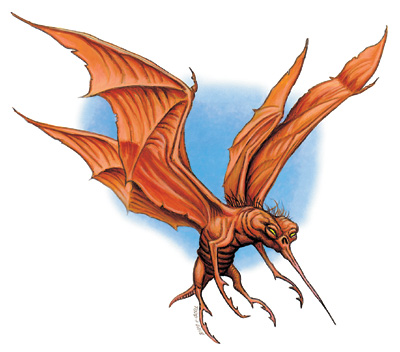 The title of this blog comes from the horrifying yet amusing idea of using Stirges as health injectors, somehow reversing their blood-sucking abilities to bestow hit points instead of damage. Every well-equipped adventurer would carry a few Healing Stirges™ for those unexpected emergencies. Simply stick the needle-like proboscis into your arm, squeeze firmly, and presto! Instant transfusion!
As an aside, if an alchemist or artificer were to make actual mechanical syringes in the D&D universe, they could look like Stirges. After all, the basic idea behind the creatures is exactly the same (though reversed in function).